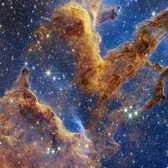
The edge of the star-forming region NGC 3324 in the Carina Nebula, a wall of gas and dust under a field of stars, seen in infrared light by the James Webb Space Telescope.

Astronomy & Astrophysics Masterclass 12-Week Program in
Astronomy and Astrophysics

Study the universe one unit per week, from the motion of the planets to black holes and the Big Bang.

  • Certificate
  • Online
  • Join a community of 5000+
Image: NASA, ESA, CSA, and STScI
Our alumni study at
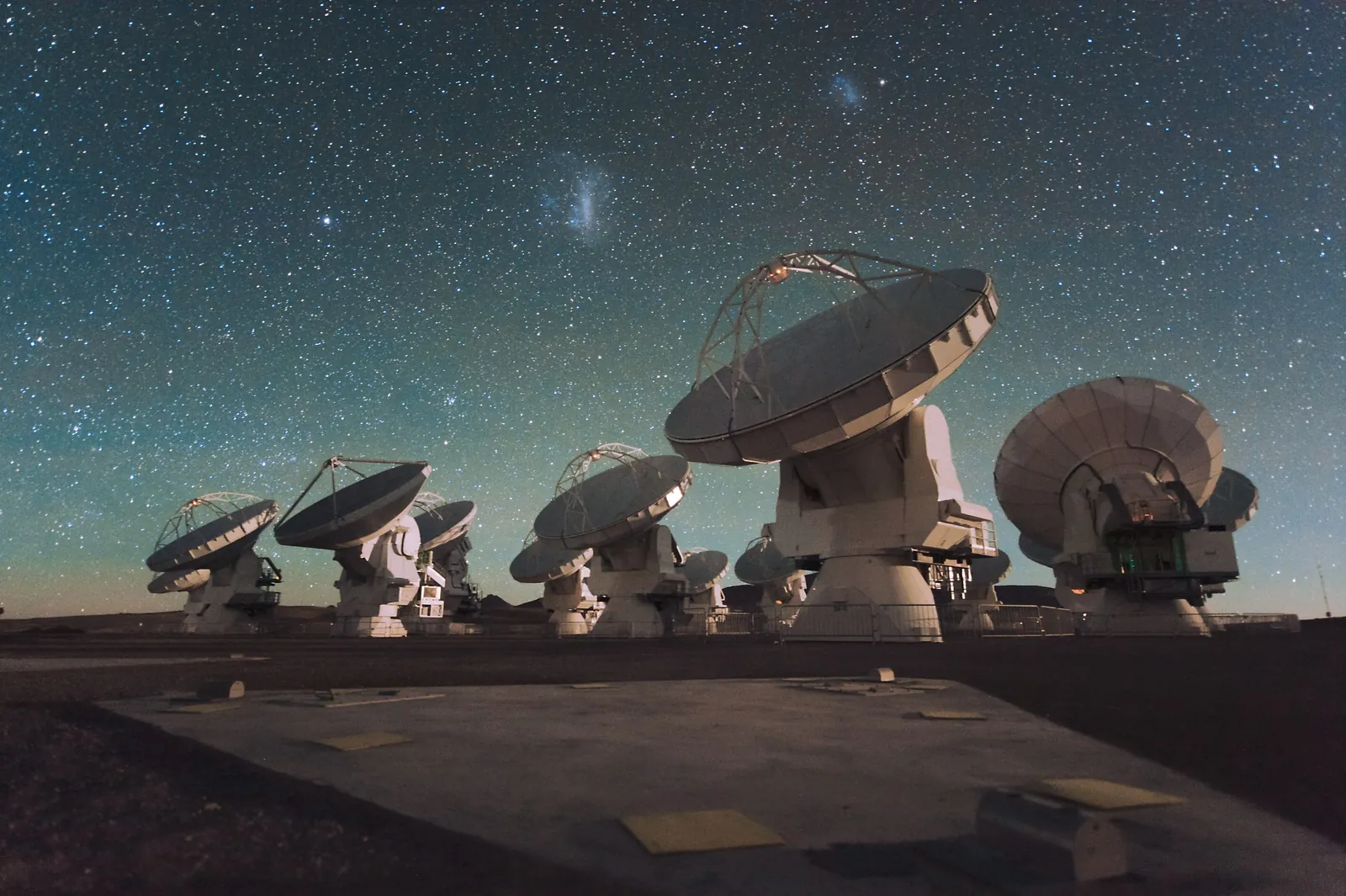
A group of ALMA radio antennas observing at night on the Chajnantor plateau, with the Large and Small Magellanic Clouds in the sky above.Image: ESO/C. Malin (christophmalin.com)

Journey through space

The A&A Masterclass takes you through the universe one unit at a time. You enrol, and from then on a new unit reaches you every week. Each unit is a chapter written for this program, with worked examples, derivations, and the research of astrophysicists who are active today.

A quiz completes every unit and opens the next. At the end you sit a final exam and receive an official certificate.

  • Structured. A fixed curriculum that builds from the first tools to current research.
  • Demanding and fair. Real physics with real mathematics, explained step by step.
  • Recognised. An official certificate and transcript with a public verification page.
How the program works

Who is this program for?

For high school students, college students and lifelong learners. You do not need prior knowledge of astronomy. Unit 1 gives every participant the same toolkit. From there the program takes you all the way to black holes, the Big Bang and the questions researchers are working on today.

High School Students

You want to understand the universe and be among the best in this field early. The masterclass also prepares you for college and for astronomy competitions.

  • School mathematics is enough
  • Certificate for applications
  • Become an expert in astronomy

College Students

A supplement to your studies that widens your horizon. Use it to prepare for astrophysics courses, a thesis or a first research project.

  • Derivations, worked examples
  • Current research papers
  • A base for a first project

Lifelong Learners

You observe the sky as a hobby, or you have always been curious about space. The masterclass takes you through all of astronomy, step by step.

  • No deadlines, pause any time
  • Unit 1 refreshes the math
  • Read on screen or as PDF

How does it work?

From enrolment to certificate in six steps.

Step 1

Enrol

Create your account with your email address, choose your masterclass and pay the tuition fee. Your program starts at once.

Step 2

Receive your unit

Unit 1 arrives immediately, every further unit on a Monday: as a web page and as a PDF to keep.

Step 3

Study

Work through the text, the worked examples and the derivations. A day later we send further reading with current research papers.

Step 4

Take a quiz for every unit

Each unit has its own quiz: ten questions, open book, no time limit. You must submit it before the next unit is sent to you.

Step 5

Sit the final exam

50 questions across all units in 60 minutes. Pass with 70%.

Step 6

Earn your certificate

Certificate and transcript as PDF, each with a verification ID and a personal link you can share.

Tuition Fee

Choose the masterclass that fits you best. One tuition fee, paid once, covers all units, quizzes, the final exam and your certificate.

8 weeks

Foundation

The fundamentals of astronomy: the sky, the stars and the galaxies.

Tuition Fee$25$39
Enrol in Foundation
  • 8 weekly units as web page and PDF
  • Quiz and further reading for every unit
  • Final exam, certificate and transcript
Topics in this program
  1. 01
    The Astronomer's Toolkit
  2. 02
    The Sky and Celestial Mechanics
  3. 03
    Light, Radiation and Spectra
  4. 04
    Telescopes and Observational Techniques
  5. 05
    The Solar System
  6. 06
    The Sun and the Properties of Stars
  7. 07
    The Lives and Deaths of Stars
  8. 08
    The Milky Way, Galaxies and the Expanding Universe
  9. 09
    Stellar Structure and Nuclear Fusion
  10. 10
    White Dwarfs, Neutron Stars and Black Holes
  11. 11
    Exoplanets and the Search for Life
  12. 12
    Active Galaxies and Supermassive Black Holes
  13. 13
    CosmologyThe Expanding Universe and Relativistic Cosmology
  14. 14
    CosmologyThe Hot Big Bang and the Cosmic Microwave Background
  15. 15
    CosmologyDark Matter, Dark Energy and Cosmic Structure
  16. 16
    CosmologyFrontiers of Astrophysics
16 weeks

Advanced + Cosmology

The full program plus four units on cosmology and current research.

Tuition Fee$75$119
Enrol in Advanced + Cosmology
  • 16 weekly units as web page and PDF
  • Quiz and further reading for every unit
  • Final exam, certificate and transcript
Topics in this program
  1. 01
    The Astronomer's Toolkit
  2. 02
    The Sky and Celestial Mechanics
  3. 03
    Light, Radiation and Spectra
  4. 04
    Telescopes and Observational Techniques
  5. 05
    The Solar System
  6. 06
    The Sun and the Properties of Stars
  7. 07
    The Lives and Deaths of Stars
  8. 08
    The Milky Way, Galaxies and the Expanding Universe
  9. 09
    Stellar Structure and Nuclear Fusion
  10. 10
    White Dwarfs, Neutron Stars and Black Holes
  11. 11
    Exoplanets and the Search for Life
  12. 12
    Active Galaxies and Supermassive Black Holes
  13. 13
    CosmologyThe Expanding Universe and Relativistic Cosmology
  14. 14
    CosmologyThe Hot Big Bang and the Cosmic Microwave Background
  15. 15
    CosmologyDark Matter, Dark Energy and Cosmic Structure
  16. 16
    CosmologyFrontiers of Astrophysics

Tuition fees are one-time payments and include applicable taxes. Secure payment by card through Stripe.

Sample certificate of the Astronomy and Astrophysics Masterclass

Your certificate

Participants who pass the final exam receive an official certificate of completion. It states your name, the program, its duration, and the units you completed.

  • Certificate and transcript. The transcript lists your score in every unit quiz and in the final exam.
  • Verifiable. Both documents carry a verification ID that can be checked on this website.
  • Shareable. Your personal verification link shows your result to universities and employers.
First page of Unit 5: The Solar System

Sample unit

Read one complete unit before you enrol, exactly as participants receive it: the full text with its worked examples, derivations, figures and research spotlight.

Unit 05 · 10 pages

The Solar System

This unit takes stock of the solar system and explains how it formed 4.567 billion years ago from a disk of gas and dust. You calculate planetary temperatures, the Roche limit and the positions of orbital resonances, and you meet the evidence that the giant planets changed their orbits early on and rearranged everything else.

What participants say

Before the masterclass I knew black holes from documentaries. After Unit 10 I could calculate a Schwarzschild radius and explain to my physics teacher why neutron stars have a maximum mass. I listed the certificate in my university application.
Maya R.Now studying Physics at Imperial College London · United Kingdom
The weekly rhythm was what I needed. One unit, one quiz, and by Sunday I had understood something for real. The derivation boxes let me decide how deep I wanted to go each week.
Daniel K.Physics undergraduate, ETH Zurich · Switzerland
I have had a telescope on the balcony for years and could name most of what I was looking at. The masterclass gave me the physics behind it: why a nebula glows, how far away it is, and how we know. The units on cosmology were the hardest, and my favorite.
Marco P.Amateur astronomer · Italy

More testimonials

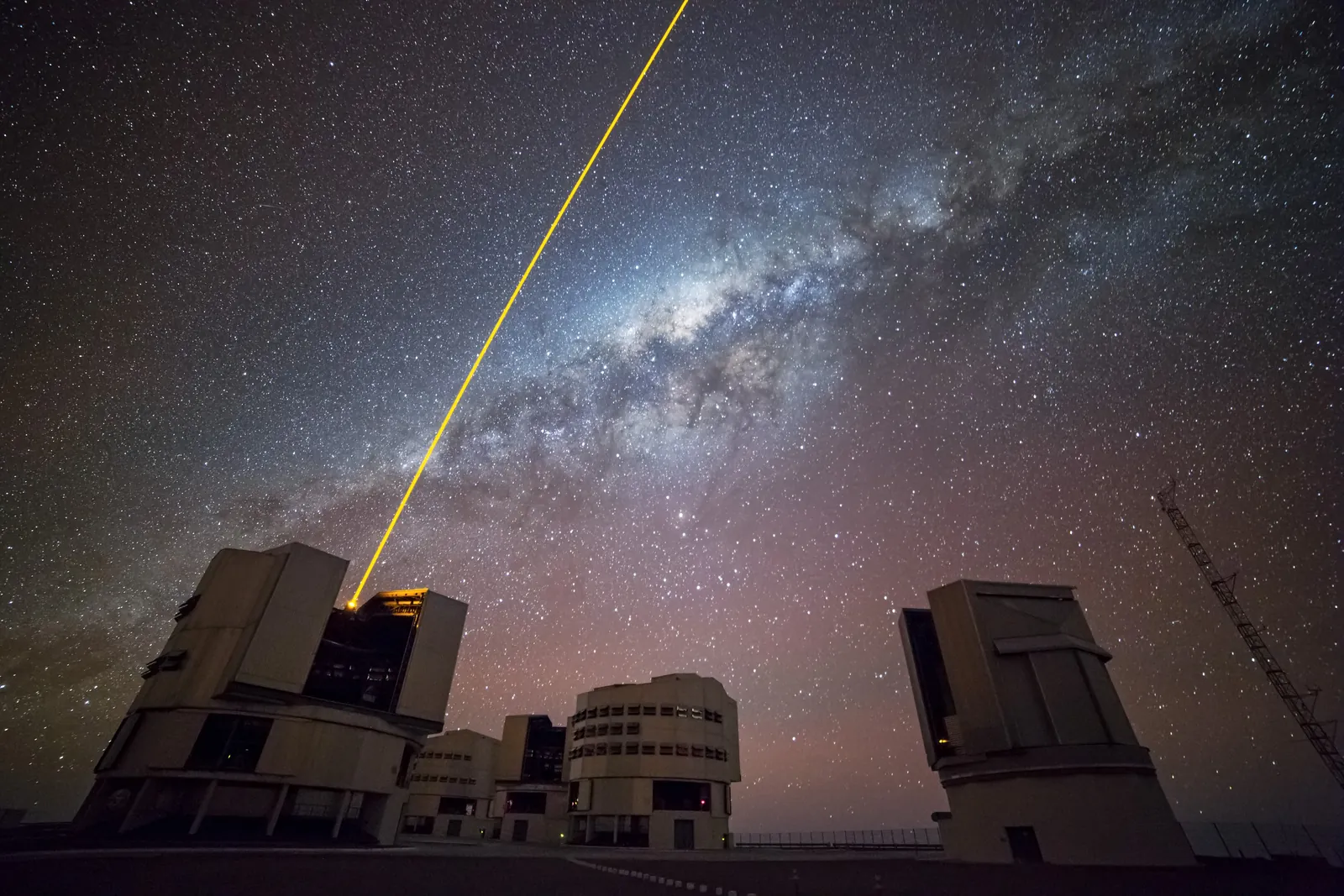
A laser beam shoots from one of the Very Large Telescope's unit telescopes at Paranal towards the bright centre of the Milky Way.

Academic community

Masterclass participants come from all over the world, and when you complete the program you stay part of a network that keeps you close to astronomy.

5000+Space academics in our community
90+Countries represented
750+Schools and universities represented

A&A-Connect

Our alumni program connects former participants across countries: for study advice, exchange about university applications and shared projects.

Opportunities

Past participants hear from us about scholarships, competitions, summer schools and other academic opportunities in astronomy and astrophysics.

A place in science

The program shows you how research works and where it happens, so that your next step, at school, at university or beyond, is an informed one.

The academic community

Frequently asked questions

Who is this program for?

For high school students, college students and lifelong learners. High school students use it to get ahead in astronomy early and to prepare for college or for competitions. College students take it as a supplement to their studies. Lifelong learners, among them many amateur astronomers, use it to learn about space in depth. The Foundation masterclass suits a first contact with the subject; the Advanced masterclass goes on to stellar structure, black holes, exoplanets and active galaxies.

Can I finish the program in less than 12 weeks?

Yes. A new unit is scheduled for every Monday, but once you have submitted the quiz of a unit you can ask for the next one ahead of schedule, from your dashboard or from the email we send you. The earliest moment is 24 hours after the previous unit was sent. We recommend the weekly rhythm, because the material needs time to settle, but the pace is your decision.

What happens if I need more time or have to pause?

Nothing is lost. The next unit is only sent once you have submitted the quiz of the current one, so the program waits for you. You can pause for a week or for a term and continue at any time. There is no penalty and no deadline.

What do I need to know before I start?

School mathematics up to powers, roots, simple equations and basic trigonometry is enough. Unit 1 refreshes every tool the later units use: scientific notation, units, angles, logarithms and the physics of motion and energy. The later units of the Advanced masterclass use simple calculus and explain each step.

How does a week in the program look?

On Monday you receive the unit by email, as a web page and as a PDF. A day later we send further reading, including current research papers that are free to read. During the week you study the unit and take the open-book quiz of ten questions. After you submit it, you see your result with explanations, and the next unit follows on the next Monday.

How does the final exam work?

After the last unit you sit the final exam online: 50 multiple-choice questions across all units, drawn individually for each participant, with a time limit of 60 minutes. It is open book. You pass with 70% correct answers. If you do not pass, you can try again after 3 days with new questions, up to 3 attempts in total.

All questions

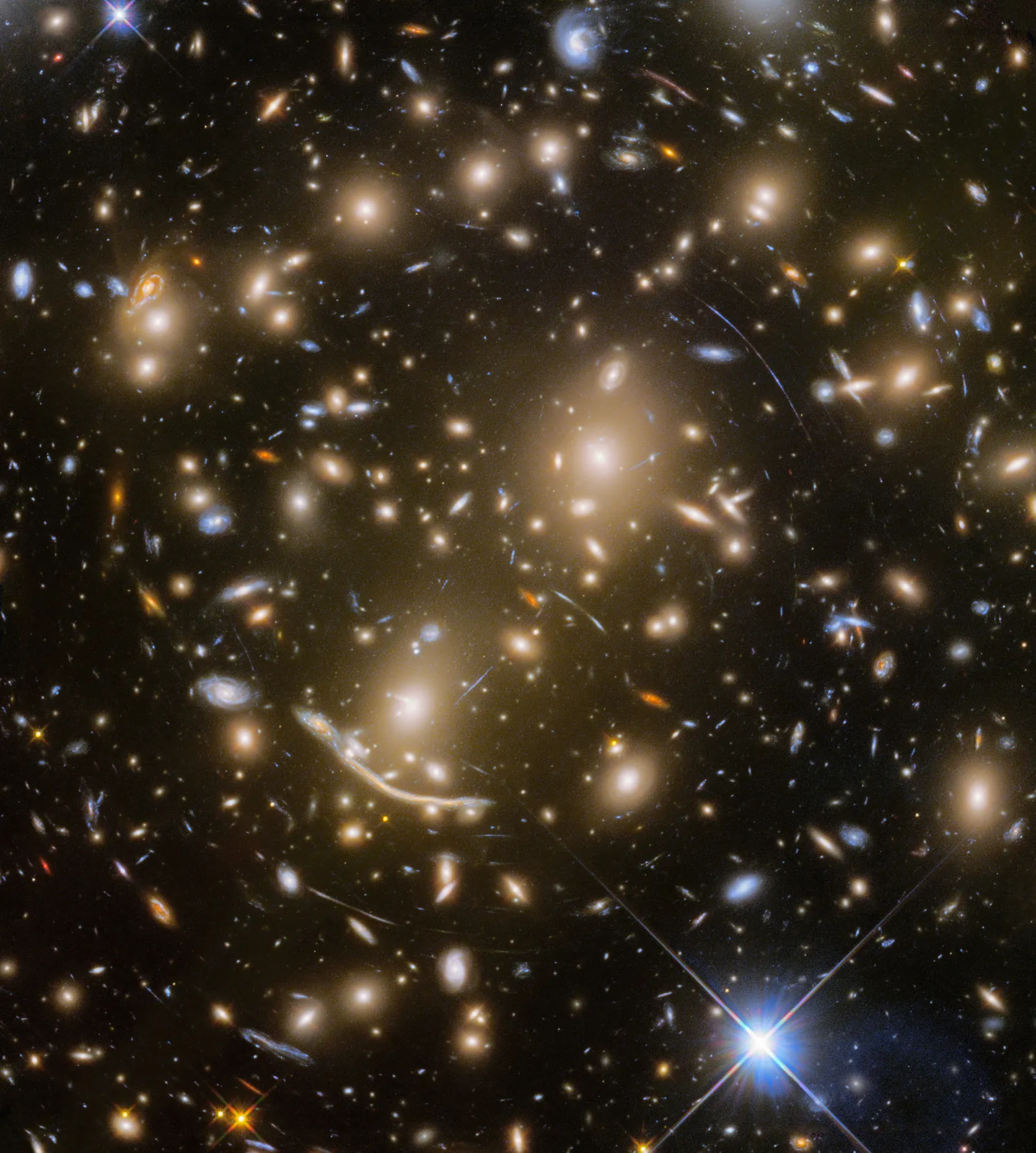
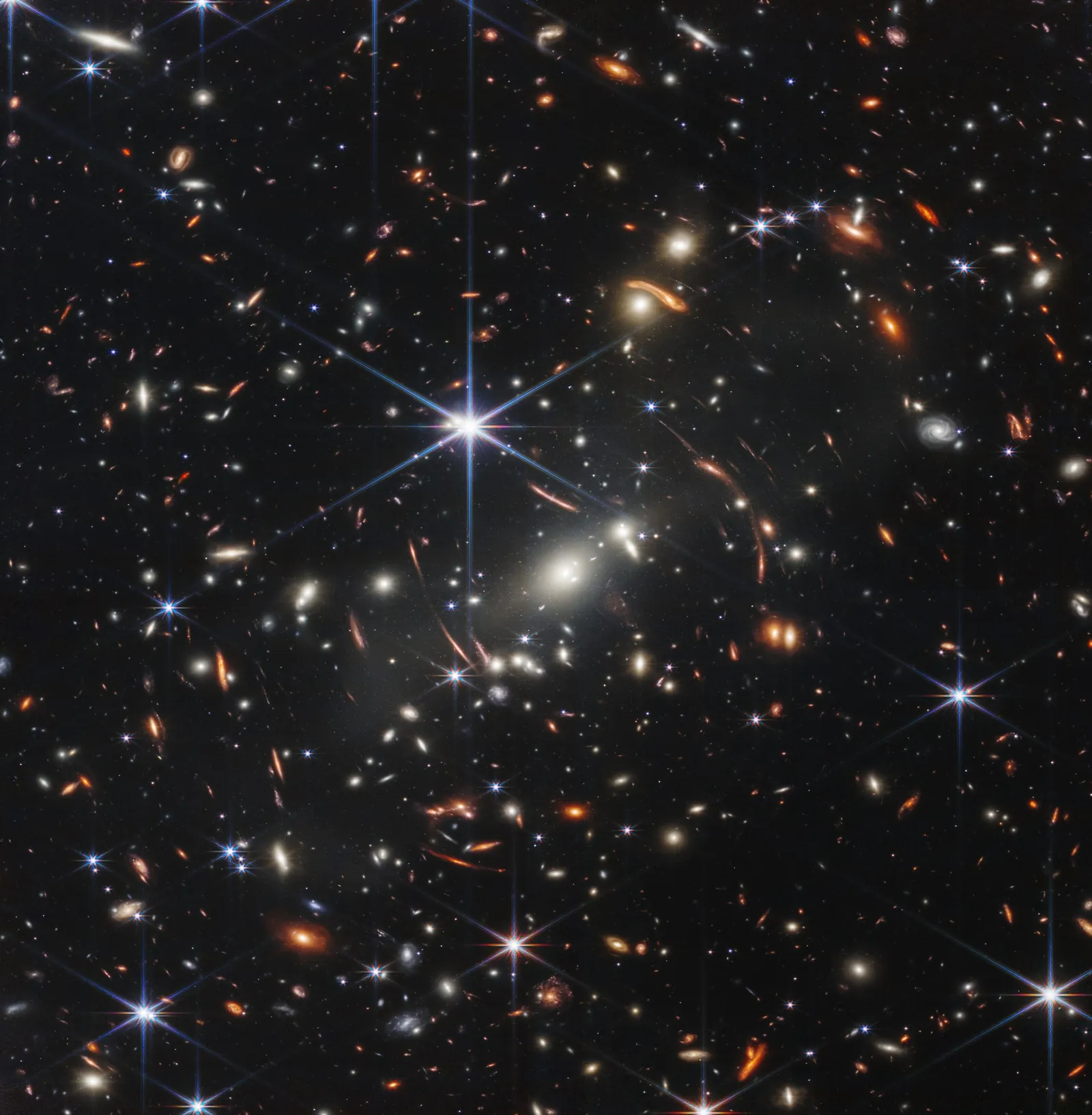
Webb's First Deep Field: thousands of distant galaxies behind the galaxy cluster SMACS 0723, some stretched into arcs by gravitational lensing.

Begin your 12 weeks with the universe